
Hello world!
Welcome to Astra Starter Templates. This is your first post. Edit or delete it, then start blogging!
Welcome to Astra Starter Templates. This is your first post. Edit or delete it, then start blogging!
Search engine optimization has traditionally been built around one simple goal: get your website to appear on Google, attract a click, and bring the visitor to your website. But search behavior is changing. Today, someone can search for a question on Google and get the answer directly on the search results page without opening a website. They might see an AI Overview, featured snippet, local business information, a People Also Ask section, product information, or another search feature that answers their question immediately. This is known as zero-click search. Zero-click searches are becoming an important part of SEO because businesses can no longer look only at website traffic to understand whether their search strategy is working. Visibility, brand recognition, search appearances and the quality of traffic also matter. Google has continued expanding AI-powered search experiences. AI Overviews are now available across more than 200 countries and territories and more than 40 languages, and Google says that in major markets such as India and the United States, the types of searches that show AI Overviews have seen more than a 10% increase in usage. So, what does all of this mean for SEO in 2026? What Is Zero-Click Search? A zero-click search happens when a person finds the information they need directly on a search engine results page without clicking through to another website. For example, imagine someone searches: “What is the capital of France?” Google can provide the answer directly. The person doesn’t need to visit another website. The same thing can happen with many other searches: Search engines have been providing direct answers for years, but AI-powered search is taking this experience further. Google’s AI Overviews and AI Mode can provide more detailed responses while also showing links to websites that support or expand on the information. This means the traditional idea of “search → click → website” is becoming more complicated. Why Are Zero-Click Searches Increasing? There is one major reason: people want answers quickly. When someone searches for a simple question, they may not want to open five different websites and read through long articles. They want the answer. Search engines are designed to make that process easier. AI has accelerated this change even further. Google says AI Overviews are helping people ask longer and more complex questions, while AI Mode allows users to continue asking follow-up questions and explore topics more deeply. For marketers, this creates both a challenge and an opportunity. The challenge is obvious: fewer clicks can happen when the answer is already visible in search. But the opportunity is that your brand can still appear in the search experience even when the user doesn’t immediately visit your website. That changes what SEO success can look like. What Are SERP Features? SERP stands for Search Engine Results Page. A SERP feature is any search result format that appears beyond the traditional list of blue website links. Some common examples include: 1. Featured Snippets A featured snippet provides a direct answer to a search query, often appearing near the top of Google’s results. For example: “What is digital marketing?” Google may display a short explanation from a webpage before the regular search results. For businesses, appearing in a featured snippet can provide significant visibility. 2. People Also Ask The People Also Ask (PAA) section shows related questions that people commonly search for. For example, someone searching for: “How does SEO work?” might also see: Creating useful content that answers related questions can help businesses target this type of search behavior. 3. Local Pack For local searches, Google can show businesses directly within the search results. For example: “Best resorts in Bangalore” may show a map and several local businesses before traditional organic results. This is particularly important for restaurants, hotels, salons, hospitals, retailers and other local businesses. 4. Knowledge Panels Knowledge panels provide information about recognized people, organizations, companies, places and other entities. They can contain information such as: 5. Image and Video Results Search results are no longer limited to written webpages. Images and videos can appear prominently depending on what someone searches for. This is one reason visual content, YouTube videos, Instagram content and image optimization can contribute to a broader search strategy. 6. AI Overviews AI Overviews are one of the biggest changes in modern search. Instead of simply presenting a list of links, Google can generate an AI-powered overview that summarizes information and provides links to supporting webpages. Google has also continued improving the way links are presented inside AI search experiences so users can explore original sources and websites more easily. Does Zero-Click Search Mean SEO Is Dead? No. This is one of the biggest misconceptions surrounding zero-click search. SEO is not disappearing. It is changing. Google reported in August 2025 that overall organic click volume from Google Search to websites was relatively stable year over year, while the average quality of clicks had increased. Google also noted that users are increasingly clicking on content such as forums, videos, podcasts, reviews and first-hand perspectives when they want to explore a subject further. This tells us something important. People may not click when they only need a quick answer. But when they want to: they may still visit websites. Therefore, SEO needs to focus not just on getting clicks, but on being visible and useful throughout the search journey. The New SEO Goal: Visibility Before the Click In traditional SEO, marketers often focused heavily on: Rank → Click → Traffic In 2026, the journey is becoming closer to: Search → Visibility → Brand Discovery → Consideration → Click → Conversion A user might first see your brand in an AI Overview. Later, they may see your social media account. Then they may search your brand name. After that, they might visit your website and finally become a customer. This means that search visibility can influence people even when there is no immediate website visit. For businesses, this makes brand visibility an increasingly important SEO objective. How to Optimize for Zero-Click
Zero-Click Search and SERP Features in 2026: How SEO Is Changing When Users Don’t Click Read More »

Search used to be quite simple. You would open Google, type a few words into the search box and choose one of the results. Today, people are searching in very different ways. They ask questions using their phones. They speak to smart devices. They use AI assistants to explore ideas. They have conversations with search engines instead of simply typing a few keywords. For marketers, this change is important. The way people search influences the way businesses create content, optimize websites and communicate with customers. This is where voice search and conversational marketing come into the picture. Instead of focusing only on short keywords such as “best resort Bangalore,” marketers increasingly need to consider questions such as: “What are the best resorts near Bangalore for a weekend stay?” The second search sounds much more like a real conversation. As search becomes more conversational, businesses need to understand the intent behind those questions. What Is Voice Search? Voice search allows people to search for information by speaking rather than typing. Examples include: Voice search can be particularly convenient when people are driving, cooking, walking or simply do not want to type. Smartphones and voice-enabled devices have made spoken searches a normal part of how people interact with technology. What Is Conversational Search? Conversational search goes beyond simply using your voice. It refers to a search experience where people communicate with search systems in a more natural, human-like way. Instead of searching: “SEO algorithm 2026” someone might ask: “Can you explain the most important SEO changes marketers should know about in 2026?” The second query contains much more context. AI-powered search experiences are also making this style of interaction more common. Google’s AI search features and other AI-powered systems can understand longer questions and provide answers based on multiple pieces of information. This means marketers need to think about topics and questions, not just individual keywords. Why Does This Matter for SEO? Traditional SEO often focused heavily on keywords. For example: Keyword: Best resort in Bangalore A marketer might optimize a page around that exact phrase. But conversational search introduces longer and more specific queries. Examples include: These searches reveal more about what the person actually wants. This is called search intent. Understanding search intent is becoming increasingly important. Search Intent Matters More Than Keyword Repetition Imagine someone searches: “best makeup artist Bangalore bridal” They probably want recommendations. Someone searches: “how to choose a bridal makeup artist” They are looking for information. Someone searches: “bridal makeup artist near me price” They may be closer to making a purchase. These three searches are related, but the intent is different. A smart SEO strategy creates content that matches the reason behind the search. Simply repeating the keyword multiple times will not automatically make content useful. Long-Tail Keywords Are Becoming More Important Long-tail keywords are longer, more specific search phrases. For example: Short keyword: “Digital marketing” Long-tail keyword: “How to learn digital marketing for beginners” The long-tail version usually has a narrower audience, but that audience may have a clearer purpose. This makes long-tail keywords particularly useful for content marketing. A business can create detailed content answering specific questions instead of trying to rank for extremely broad terms. The Importance of Question-Based Content One simple way businesses can prepare for conversational search is to create content around real customer questions. For example, a resort could answer: A jewellery business could answer: A digital marketing agency could answer: This type of content can help businesses address the questions customers actually ask. Local SEO and Voice Search Voice search is particularly interesting for local businesses. Consider a person saying: “Find a restaurant near me.” or: “Where is the nearest jewellery store?” or: “Best resort near Bangalore for a weekend?” These searches have strong local intent. This means local SEO becomes increasingly important. Businesses should make sure their: are accurate and consistent across relevant platforms. A complete and accurate Google Business Profile is especially important for local visibility. Conversational Marketing Is More Than Search There is another side to this trend. Conversational marketing is also about how businesses communicate with customers. Instead of forcing customers through long forms and complicated websites, businesses can use conversational tools to help them find information. Examples include: For example, instead of asking a customer to search through ten pages of a website, a chatbot could help them find the correct product. WhatsApp and Conversational Commerce Messaging has become an important part of the customer journey. A customer may see a product on Instagram and then send a WhatsApp message asking: “Is this available in black?” “What’s the price?” “Can you deliver tomorrow?” “Do you have size M?” This is no longer just customer service. It can become part of the sales process. The conversation itself helps the customer move closer to making a decision. This is often referred to as conversational commerce. AI Assistants Are Changing Search Behavior AI assistants have introduced another major change. Instead of opening several websites and comparing information manually, people can ask an AI system to explain something, compare options or help them plan what to do next. For example: “Compare three types of digital marketing campaigns for a small business.” The user is no longer just looking for a list of websites. They are looking for an answer. This creates both an opportunity and a challenge for marketers. Businesses need to create content that is genuinely useful, accurate and easy for search systems to understand. What Is Answer Engine Optimization? You may have heard terms such as: These concepts generally focus on making information easier for AI-powered search and answer systems to understand and potentially surface. Traditional SEO often asks: “How do I rank this page?” Conversational and AI search introduces another question: “How do I make my information useful enough to become part of an answer?” This means clear explanations, structured content, trustworthy information and strong topical coverage are becoming increasingly important. How Businesses Can Optimize for Conversational Search There is no guaranteed formula
Voice Search and Conversational Marketing in 2026: How Search Is Changing Read More »

Digital marketing has become much easier to start, but it has also become much harder to manage without data. A business can create an Instagram page, run Google Ads, publish blogs, send emails and build a website within a few days. But after all that work, one important question remains: Is any of it actually working? This is where digital marketing analytics becomes important. Marketing analytics helps businesses understand what people are doing, where visitors are coming from, which campaigns are generating results and where potential customers are dropping off. In 2026, analytics is becoming even more important because customers interact with brands across multiple platforms. Someone might discover a business through Instagram, search for it on Google, visit the website and finally make a purchase several days later. Looking at only one platform may not tell the complete story. Modern marketers therefore need to understand not just how much traffic they are getting, but what that traffic is doing and whether it is contributing to business goals. What Is Digital Marketing Analytics? Digital marketing analytics is the process of collecting, measuring and analyzing data from digital marketing activities. It can help businesses understand: Tools such as Google Analytics 4, Google Ads, Search Console, Meta Ads Manager and CRM platforms can provide different parts of this information. The real value comes from bringing these insights together and using them to make better decisions. Why Marketing Analytics Matters Imagine a business spends ₹50,000 on digital marketing in one month. It receives: At first, the campaign might appear successful. But analytics could reveal something more interesting. Perhaps Instagram generated 5,000 visits but only 10 sales, while Google Search generated 2,000 visits and 35 sales. Without analyzing the data, the business might continue spending heavily on Instagram simply because it generated more traffic. Analytics changes the question from: “Which channel is getting the most attention?” to: “Which channel is helping us achieve our business objective?” That is a much more useful question. GA4 and the Changing Role of Analytics Google Analytics 4, commonly called GA4, is one of the most widely used analytics platforms for websites and apps. Unlike older analytics approaches that focused heavily on sessions and pageviews, GA4 is built around events. An event can represent an interaction such as a page view, button click, search, sign-up or purchase. This makes analytics more flexible. For example, an online store could track: Google provides recommended events for activities such as purchases, sign-ups, searches and lead generation. A marketer can then analyze what happens between the first interaction and the final business outcome. What Are Key Events? One important change marketers need to understand is the terminology used in GA4. Google now uses the term key event for an event that represents an action particularly important to the success of a business. For example: Any event that is important to the business can be marked as a key event in Analytics. This is useful because businesses do not necessarily care about every website interaction equally. Someone viewing a page is useful information. Someone submitting a booking enquiry may be much more valuable. Analytics allows marketers to distinguish between these actions. Events, Key Events and Conversions These terms can sometimes be confusing for beginners. Think of them this way: Event → Key Event → Conversion An event records something that happens. If that action is particularly important to the business, it can be marked as a key event. If the business wants to use that important action specifically to measure and optimize advertising campaigns, it can be used as a conversion in Google Ads. For example: A visitor clicks the “Book Now” button. That is an event. If booking enquiries are important to the business, the event can become a key event. If the business wants Google Ads to optimize toward those bookings, the relevant action can be configured as a conversion. Understanding this difference is important when setting up measurement. Traffic Is Not the Same as Success One of the biggest mistakes beginners make in digital marketing is focusing too much on traffic. More traffic sounds good. But traffic alone does not pay the bills. Consider two websites. Website A 20,000 visitors100 enquiries5 customers Website B 5,000 visitors250 enquiries40 customers Website A has four times more traffic. But Website B is producing much stronger business results. This is why marketers should look beyond traffic and analyze the entire funnel. Understanding the Marketing Funnel A basic digital marketing funnel can be divided into several stages. 1. Awareness People become aware of the brand. Metrics can include: 2. Interest People start interacting with the business. Metrics can include: 3. Consideration People show stronger buying intent. Examples include: 4. Conversion The customer takes the desired action. Examples: 5. Retention The business tries to keep the customer. Metrics can include: Analytics helps marketers understand what is happening at each stage. What Is Attribution? Attribution is one of the more complicated areas of digital marketing analytics. A customer may interact with several marketing channels before converting. For example: Instagram Reel → Google Search → Website → Email → Purchase Which channel deserves credit for the sale? The answer is not always simple. Attribution is the process of assigning credit to different marketing touchpoints along the customer’s journey. This matters because businesses use attribution information when deciding where to invest their marketing budgets. Data-Driven Attribution Google Analytics uses data-driven attribution as its default attribution model for many key-event reports. Instead of automatically giving all the credit to the first or last interaction, data-driven attribution uses available data to estimate how different touchpoints contributed to the outcome. For example, suppose a customer first discovers a business through an Instagram campaign, later searches for the brand on Google and eventually returns through an email before purchasing. The final email click may have been the last interaction, but the earlier touchpoints may also have played an important role. Data-driven attribution attempts to account for this broader journey. Why Last-Click Attribution Can
Digital Marketing Analytics in 2026: How Data Is Changing Marketing Decisions Read More »
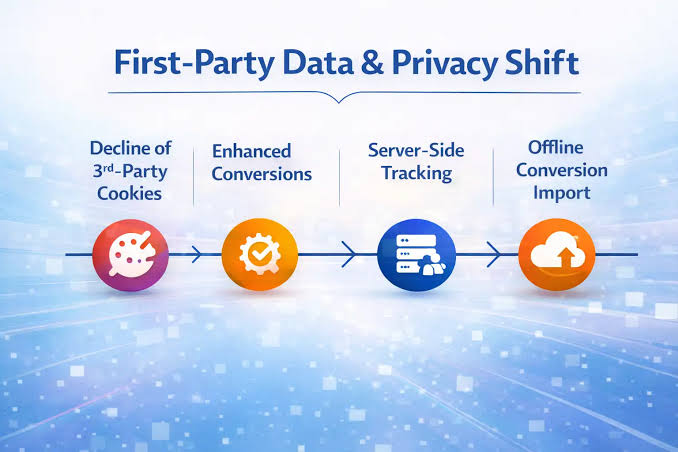
For years, digital marketers relied heavily on third-party cookies and tracking technologies to understand online users and show them targeted advertisements. But the digital advertising landscape is changing. People are becoming more conscious about how their personal information is collected and used. At the same time, browsers, platforms and regulators are introducing changes that are forcing businesses to rethink how they collect and use customer data. This has made first-party data one of the most important topics in digital marketing. Instead of depending entirely on information collected from outside sources, businesses are increasingly focusing on data that customers voluntarily share directly with them. This includes information from websites, apps, purchases, email subscriptions, loyalty programs, customer accounts, surveys and direct interactions. The shift is bigger than simply replacing cookies. It represents a move toward building stronger and more transparent relationships with customers. What Is First-Party Data? First-party data is information that a business collects directly from its own customers or audience. For example, imagine you own an online clothing store. A customer visits your website and: The information collected through these interactions can become first-party data. Because the information comes directly from the customer’s interaction with the business, it can be extremely valuable for marketing. Examples of first-party data include: However, collecting data does not automatically mean a business should use all of it. The way data is collected, stored and used matters just as much. First-Party Data vs Third-Party Data Understanding the difference is important. First-Party Data Collected directly by your business from your own customers and audience. Example: A customer signs up for your newsletter. Second-Party Data Another organization’s first-party data that is shared with your business through a partnership or agreement. Example: Two businesses collaborate and share selected customer insights under an appropriate agreement. Third-Party Data Information collected from multiple external sources and typically made available by another company. Historically, third-party data and cookies played a significant role in digital advertising and audience targeting. But increasing privacy concerns and changes in the technology ecosystem have made businesses rethink their dependence on this type of data. Why Is First-Party Data Becoming More Important? The biggest reason is control. When a business collects its own customer data, it has a direct relationship with the source. For example, a restaurant that operates its own loyalty program can understand customer preferences through direct interactions. An e-commerce company can learn from purchases and website behavior. A beauty brand can understand product preferences through customer accounts and surveys. This information can help businesses make better decisions. Instead of asking: “Who might be interested in my product?” the business can start asking: “What have my existing customers actually shown us that they need?” That can lead to much more relevant marketing. The Difference Between First-Party and Zero-Party Data Another term that marketers should understand is zero-party data. First-party data is information a business observes or collects through customer interactions. Zero-party data is information that customers intentionally and directly provide about themselves. For example, a customer might answer: “What type of skincare are you interested in?” and choose: That is zero-party data because the customer has deliberately told the brand what they want. This type of information can be particularly useful for personalization. What Is Personalized Marketing? Personalization means tailoring marketing messages or experiences based on information about the customer. Think about the difference between these two emails: Generic: “Check out our latest products.” Personalized: “Since you recently purchased a skincare cleanser, here are three moisturizers that may work well with it.” The second message is more relevant. Personalization can appear in: The goal is not simply to insert someone’s name into an email. Real personalization is about making the experience more relevant. Why Personalization Matters Customers are exposed to an enormous amount of marketing every day. If every business sends exactly the same message to everyone, it becomes difficult to get attention. Personalization can help businesses communicate more effectively by focusing on what is relevant to an individual customer or customer group. For example, an online fashion store could recommend winter clothing to customers who are shopping for cold-weather destinations. A travel company could promote family holidays to customers who previously booked family packages. A coffee brand could offer a discount on a customer’s regularly purchased product. These experiences can feel more useful than random promotions. Personalization Does Not Mean Being Creepy There is an important line between useful personalization and uncomfortable personalization. Imagine a customer looks at a product once and suddenly receives advertisements everywhere for the next two weeks. The customer may not find that helpful. They may instead feel that they are being watched. This is why privacy needs to be part of personalization. A good marketer should always ask: “Would the customer understand why they are receiving this message?” If the answer is no, the strategy probably needs to be reconsidered. Privacy-First Marketing Privacy-first marketing means building marketing strategies around transparency, responsible data collection and customer choice. Instead of collecting as much information as possible, businesses should think about collecting the information they genuinely need. For example, if a newsletter only needs an email address, there may be no reason to ask for a customer’s date of birth, address and phone number. The principle is simple: Collect what you need. Explain why you need it. Use it responsibly. This can also help build trust. Consent Is Becoming More Important Customers should understand when they are providing information and how it will be used. For example, a website might allow customers to subscribe to marketing emails. The customer should be able to understand what they are signing up for. Consent should not be hidden inside complicated language that people cannot reasonably understand. For marketers, this means privacy cannot simply be treated as a legal or technical issue. It is also a customer experience issue. The Role of CRM in First-Party Data Customer Relationship Management, or CRM, systems have become increasingly important in first-party data strategies. A CRM can help businesses organize
First-Party Data and Privacy-First Marketing: The Future of Digital Marketing in 2026 Read More »
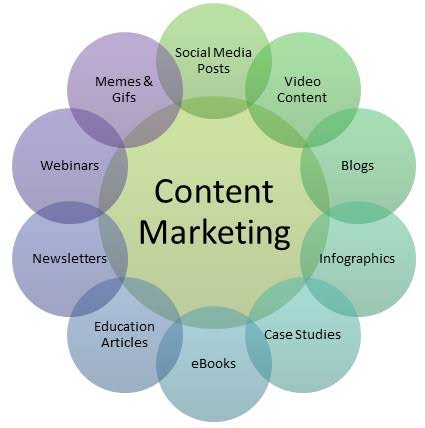
A few years ago, creating a video for a business usually meant having a camera, proper lighting, editing software and a lot of time. Today, things are very different. A smartphone is enough to create a video, edit it and publish it to thousands of potential customers. Platforms such as Instagram, YouTube and other social networks have made short-form video one of the most important formats in digital marketing. From a 15-second product demonstration to a 60-second educational video, short videos have become a simple way for brands to attract attention and communicate an idea quickly. But there is more to short-form video than simply making Reels or Shorts. In 2026, successful video marketing is increasingly connected with search, content strategy, creators, artificial intelligence, social commerce and customer behavior. For businesses, the question is no longer just “Should we make videos?” It is: “How can we create videos that people actually want to watch and that also contribute to our marketing goals?” What Is Short-Form Video Marketing? Short-form video marketing is the use of relatively short videos to promote a business, product, service, idea or personal brand. Some common formats include: The length can vary depending on the platform and type of content. The important thing is not necessarily how many seconds the video lasts. The important thing is whether the video gives the viewer a reason to continue watching. Why Is Short-Form Video So Popular? Attention has become one of the most valuable resources online. People scroll quickly. If a video does not immediately look interesting, there is always another video one swipe away. This has changed the way marketers approach content. Instead of explaining everything at once, brands increasingly use short videos to deliver one useful idea at a time. For example, a skincare brand might create separate videos about: “How to use a cleanser correctly” “3 mistakes that cause dry skin” “How to layer skincare products” “What does salicylic acid actually do?” Each video answers one question. This makes content easier to consume and easier to produce consistently. Short-Form Video Is Also a Search Tool One of the biggest changes in content discovery is that people do not rely only on traditional search engines anymore. They also search for information through social platforms. Someone looking for a restaurant might search Instagram. Someone learning makeup might search YouTube. Someone looking for a quick tutorial might search directly within a social platform. This means video content needs to be discoverable. Marketers should think about keywords, captions, titles, descriptions, spoken content and the actual topic of the video. This is sometimes referred to as video SEO. What Is Video SEO? Video SEO means optimizing video content so that it has a better chance of being discovered through search. For example, instead of naming a video: “IMG_4837_Final_Final.mp4” a marketer could use a clear topic such as: “5 Easy Makeup Tips for Beginners” The same principle applies to captions, titles and descriptions. If your video is about “SEO tips for small businesses,” those words should naturally appear in the title or description. The goal is not to stuff keywords everywhere. It is to make it clear what the content is about. The First Few Seconds Matter One of the biggest challenges with short-form video is getting people to stop scrolling. This is why the opening seconds are extremely important. A video can have excellent information, but if the introduction takes too long, viewers may leave before reaching the useful part. Instead of starting with: “Hi everyone, welcome back to my channel…” you could start with: “Your Instagram Reels aren’t getting views? Try these three changes.” That immediately tells the viewer what they are going to get. Other useful hooks include: A good hook does not have to be clickbait. It simply needs to create curiosity or communicate value quickly. Educational Content Performs Differently Not every video needs to entertain. Educational content can work extremely well when it solves a specific problem. For example, a digital marketing agency could create videos explaining: A jewellery business could create: This type of content can build authority. Instead of constantly saying “Buy from us,” the brand becomes a source of useful information. That can make customers more comfortable when they eventually decide to purchase. Short-Form Video and Brand Building A common mistake is to think that every video needs to generate an immediate sale. It doesn’t. Some content is designed to create awareness. Some content builds trust. Some content educates. Some content generates enquiries. And some content directly promotes a product. A strong content strategy uses different types of videos rather than turning every Reel into an advertisement. For example, a fashion brand might use: 40% educational content Styling tips and fashion advice. 30% entertaining content Trends, relatable situations and creative videos. 20% social proof Customer reviews and creator content. 10% promotional content Products, offers and launches. The exact percentages do not have to be followed strictly. The main idea is to avoid making the entire account feel like one long advertisement. The Growth of UGC Video User-generated content is particularly useful for short-form video. A customer can show how they actually use a product instead of the brand simply describing it. For example: A makeup customer records herself applying a foundation. A hotel guest records a room tour. A customer shows how a piece of jewellery looks when worn. A restaurant customer records their meal. This type of content can feel more natural than traditional advertising. It also gives businesses a library of real-world content that can potentially be reused with permission. Influencers Are Turning Videos Into Recommendations Creators have also changed video marketing. Instead of a company simply saying: “Our product is amazing.” a creator can demonstrate the product to their audience. That creates a different kind of communication. The creator already has an established relationship with their audience, so the recommendation can feel more personal. This is particularly effective in categories such as: However, follower count should not be the only factor
Short-Form Video and Content Marketing: Why Reels and Shorts Matter in 2026 Read More »
Social media has changed the way people discover almost everything. A person can open Instagram to watch a Reel, notice a skincare product, see someone using it, read the comments, check the brand’s profile and decide to buy it — all within a few minutes. This is exactly why social media is no longer just a platform for likes, followers and entertainment. It has become an important part of the buying journey. In 2026, three areas are becoming especially important for marketers: social commerce, influencer marketing and user-generated content (UGC). These three strategies work particularly well together. A creator introduces a product, UGC makes the product feel trustworthy, and social commerce makes it easier for the customer to purchase. In India, this shift is becoming especially noticeable. Meta and the Retailers Association of India reported in 2026 that social media influences 77% of retail purchase decisions, while short-form video and creators are playing an increasing role in product discovery. So, what does this mean for businesses and digital marketers? What Is Social Commerce? Social commerce refers to buying and selling products or services through social media platforms. Traditional online shopping usually looks something like this: Search → Website → Product page → Checkout Social commerce can be much more natural: Scroll → Discover → Watch → Trust → Buy Instead of actively searching for a product, customers may discover it while watching content. For example, someone may not be planning to buy a handbag. They watch a fashion creator’s Reel, like the handbag, visit the brand profile and eventually make a purchase. This is one of the biggest changes in modern digital marketing. Social media is becoming part of the shopping experience itself. Sprout Social describes social commerce as the movement from product discovery toward shopping within social platforms, reducing the distance between seeing something and purchasing it. Why Is Social Commerce Growing So Quickly? People are spending a significant amount of time consuming social content. But the bigger change is in how people discover products. Instead of searching for a specific product every time, consumers are increasingly influenced by videos, creators, recommendations, reviews and conversations. Meta’s 2026 India research found that 77% of retail product discovery happens through social media, with Meta platforms accounting for 96% of that social discovery in the study. This means a brand does not necessarily have to wait for customers to search for it. It can appear in front of them while they are already consuming content. That is a huge opportunity for businesses. Influencer Marketing Is Becoming More Performance-Driven Influencer marketing is not new. Brands have been working with celebrities and influencers for years. But the approach is changing. Previously, a brand might pay an influencer simply to post a picture with a product. Today, brands increasingly want to know: This is pushing influencer marketing away from vanity metrics and toward measurable business results. Sprout Social’s 2026 influencer marketing research highlights the growing importance of micro-influencers, social commerce integration, AI-assisted creator workflows and performance-based measurement. That is particularly useful for smaller businesses. A brand does not always need to work with someone who has millions of followers. Why Micro and Nano Influencers Matter A creator with 15,000 followers might sometimes be more valuable to a local business than a celebrity with one million followers. Why? Because smaller creators often have a more focused community. Imagine a Bangalore-based skincare brand. Instead of spending a huge amount on a celebrity who has followers across the entire country, the brand could work with several smaller beauty creators whose audiences are genuinely interested in skincare. Their content can feel more like a recommendation from someone the audience follows regularly. This is one reason micro and nano influencers are becoming increasingly important. For businesses, the question should not simply be: “How many followers does this creator have?” A better question is: “Does this creator influence the people I want to reach?” What Is User-Generated Content? User-generated content, commonly called UGC, is content created by customers or users rather than directly by the brand. Examples include: UGC works because it can make a product feel more real. A professionally produced advertisement tells people: “Our product is good.” A real customer’s video can communicate: “I actually used this, and this is what I thought.” That difference matters. Why UGC Is So Powerful in 2026 Consumers are surrounded by advertisements. They see sponsored posts, banner advertisements, influencer promotions and brand videos every day. Because of this, people have become better at recognizing advertising. UGC can break through that feeling because it often looks more natural. Sprout Social’s 2026 research identifies human-generated content as something consumers increasingly want brands to prioritize, while short-form video remains one of the strongest content formats for social engagement. This does not mean every UGC video has to look unprofessional. The goal is not to make content bad. The goal is to make it believable and relatable. Short-Form Video Is Driving Product Discovery Reels, Shorts and other short-form videos have completely changed the way products are presented. A static product photograph can show what something looks like. A video can show: That makes video particularly powerful for product discovery. Meta’s June 2026 research found that 97% of surveyed Indian users watched video on its platforms daily, while Reels showed strong influence across product discovery, consideration and purchase decisions. For marketers, this means video should not be treated as an optional extra. For many brands, it is becoming a central part of the marketing strategy. The “Scroll to Purchase” Journey Traditional marketing often focused heavily on search. Someone knows what they want, searches for it and then compares different options. Social commerce creates another journey. A customer might: See a Reel → Become curious → Watch another video → Visit comments → Check reviews → Visit the brand → Message the business → Purchase The interesting part is that the customer may not have been looking for the product at the beginning. The content created the demand.
Social Commerce, Influencer Marketing and UGC: The Future of Digital Marketing in 2026 Read More »
Digital marketing has always been about reaching the right person at the right time. But the way businesses do that is changing quickly. A few years ago, artificial intelligence in marketing sounded like something reserved for large technology companies. Today, AI tools are being used by small businesses, startups, agencies and large brands to create content, understand customers, automate repetitive tasks and improve advertising campaigns. In 2026, AI is no longer just an experimental technology for marketers. It has become part of everyday marketing work. From writing an initial social media idea to analyzing customer behavior, AI can now assist with several stages of a marketing campaign. However, that does not mean marketers can simply press a button and let AI handle everything. The real advantage comes from knowing where AI can help and where human judgment is still necessary. According to Gartner, marketing leaders expect AI-driven automation of marketing work to more than double, from 16% in 2026 to 36% by 2028. So, what exactly is changing? What Is AI-Powered Digital Marketing? AI-powered digital marketing means using artificial intelligence to improve, automate or support different marketing activities. Traditional marketing often requires marketers to manually collect data, study customer behavior, create campaigns, write content, analyze results and make changes. AI can help speed up many of these processes. For example, an AI-powered marketing system can analyze customer data and identify patterns that might take a human team much longer to discover. It can help a business understand which customers are more likely to purchase, which type of content gets attention and which advertising messages are performing better. AI can also help marketers personalize experiences. Instead of showing exactly the same message to everyone, businesses can use customer information to make their communication more relevant. This is one reason AI-powered marketing has become such an important digital marketing trend in 2026. Why Are Businesses Investing in AI Marketing? One of the biggest reasons is efficiency. Marketing teams are under constant pressure to produce more content, run more campaigns and generate better results without endlessly increasing their budgets. AI can take care of many repetitive tasks, giving marketers more time to focus on strategy and creative thinking. The World Federation of Advertisers reported in September 2026 that 96% of major brands surveyed were using generative or agentic AI in marketing, compared with 45% in 2023. The uses have also expanded beyond content creation into research, media optimization, strategy and workflow automation. This shows how quickly AI has moved from being an interesting experiment to becoming part of normal marketing operations. 1. AI Is Changing Content Creation Content creation is probably the most visible use of AI in digital marketing. Marketers can use AI tools to brainstorm blog topics, create content outlines, develop social media ideas, write different versions of advertising copy and generate variations for different audiences. But there is an important difference between using AI to create content and allowing AI to completely replace the creative process. The internet is already filled with generic content. If every brand publishes the same AI-generated articles and social media posts, it becomes difficult for any business to stand out. That is why human input still matters. A marketer can use AI to generate ten ideas, but the marketer still needs to decide which idea is actually useful for the audience. Personal experiences, opinions, examples, storytelling and brand personality are what make content feel real. Canva’s 2026 marketing research found that 97% of marketing leaders surveyed use AI daily, while 87% said the best advertising still needs a human touch. The lesson is simple: use AI to increase creativity, not to remove creativity. 2. AI-Powered Personalization Imagine visiting an online store and seeing products that actually match your interests instead of a random collection of products. That is where AI-powered personalization becomes useful. AI can analyze information such as browsing behavior, previous purchases, interactions and content preferences to help businesses deliver more relevant experiences. For example, an online fashion store might identify that a customer regularly looks at ethnic wear and recommend similar products. A travel company might show different offers based on whether someone usually searches for weekend trips, luxury vacations or family holidays. This can make marketing feel more useful because customers are not receiving completely irrelevant messages. However, personalization needs to be handled carefully. Customers want relevance, but they do not want brands to feel intrusive. The best personalization is usually the kind that feels helpful rather than creepy. 3. AI and Marketing Automation Marketing automation is another area where AI is making a major difference. Traditional automation works through predefined rules. For example: If someone fills out a form → send an email. If someone purchases a product → send a confirmation message. If someone abandons a cart → send a reminder. AI can make these systems more flexible by analyzing behavior and helping marketers determine what action is more appropriate. AI-powered automation can support email marketing, customer segmentation, lead nurturing, advertising optimization and customer service. Gartner’s 2026 research found that marketing leaders expect AI-driven automation to increase substantially over the next two years. For small businesses, this can be particularly useful because a small marketing team can accomplish tasks that previously required much more manual work. 4. AI Is Changing Digital Advertising Running digital advertisements is not simply about creating an attractive ad anymore. Marketers need to decide who should see the advertisement, which creative should be used, what message should be displayed and how much should be spent. AI can assist with many of these decisions. Advertising platforms increasingly use machine learning to identify audiences, optimize delivery and pr
AI-Powered Digital Marketing and Automation: How AI Is Changing Marketing in 2026 Read More »
Search engines are changing faster than most businesses expected. For years, digital marketers followed a familiar formula: find the right keywords, create content, build backlinks, optimize a website, and try to reach the first page of Google. Those fundamentals still matter, but the way people discover information online is becoming much more conversational. Today, a person might search Google, receive an AI-generated overview, ask ChatGPT for recommendations, compare several options through an AI search tool, or use an image to find a product or business. This shift has created a new area of digital marketing known as AI SEO and, more broadly, Generative Engine Optimization (GEO). But what exactly does this mean for businesses and marketers? What Is AI SEO? AI SEO refers to the process of optimizing a website and its content so that it can be discovered, understood and potentially surfaced across AI-powered search experiences as well as traditional search engines. Traditional SEO focuses heavily on helping search engines understand a website and rank its pages for relevant queries. AI SEO takes that idea further. Instead of thinking only about: “How can I rank number one for this keyword?” marketers increasingly need to think: “How can my brand become a useful and trustworthy source when people ask AI about this topic?” Google’s own guidance makes an important point here: traditional SEO has not become irrelevant. Google’s AI features use information from its Search index and rely on existing ranking and quality systems to retrieve relevant web pages. So AI SEO isn’t about throwing away everything we learned about SEO. It is about adapting those fundamentals to a changing search environment. What Is Generative Engine Optimization (GEO)? Generative Engine Optimization, commonly called GEO, is the practice of improving a brand’s visibility in generative AI experiences. Think about the difference between these two situations. Someone searches: “Best digital marketing agencies in Bangalore.” Traditional SEO focuses on ranking webpages for that search. Now imagine someone asks an AI tool: “What are some good digital marketing agencies in Bangalore for a small business?” The AI may provide a written answer and mention several businesses. That creates a new visibility opportunity. The objective is no longer limited to receiving a click from a traditional search result. A business also wants its expertise, website, products or brand to be represented accurately when AI systems answer relevant questions. Research from Semrush in 2026 found that AI visibility can vary considerably from one prompt to another. Its study of 1,094 topic areas found that only 15.2% had a clear topic owner, suggesting that many areas remain competitive for brands trying to build visibility in AI search. Why Is AI Search Becoming So Important? The biggest reason is simple: people are changing how they search. Instead of entering short phrases into Google, users can now ask detailed questions in natural language. For example, a traditional search might be: “Best skincare products for oily skin.” An AI search query could be: “I have oily, sensitive skin and a limited budget. Which skincare products should I consider and why?” The second question contains much more context. AI-powered search can interpret that context and provide a conversational response. This means marketers need to understand search intent, not simply keywords. Google has also continued expanding its AI search experiences. Its current guidance covers AI Overviews and AI Mode, while Google has stated that its generative AI search features are grounded in information retrieved from its Search index. AI Overviews Are Changing the Search Results Page One of the biggest developments in search is Google’s AI Overview. Instead of requiring users to open several webpages and combine information themselves, an AI Overview can provide a synthesized response directly within Search. This has significant implications for digital marketers. A page may still rank well organically, but the user may first encounter an AI-generated response containing links to selected sources. Semrush’s 2026 research examined more than 600,000 keywords and found that the presence of AI Overviews on commercial-intent search results increased by 71% during its six-month study period. This is especially important for businesses because commercial searches are often connected to research and purchasing decisions. For example: These aren’t merely informational searches. They can influence what someone eventually buys. Does Traditional SEO Still Matter? Yes. This is one of the biggest misconceptions surrounding AI SEO. Some marketers assume that because AI tools are becoming popular, keywords, technical SEO, backlinks and website optimization no longer matter. That isn’t what Google says. Google’s current guidance specifically states that SEO best practices remain relevant to generative AI search because its AI features rely on core Search systems. This means businesses should continue focusing on: The difference is that marketers should stop treating SEO as simply a race to insert a keyword as many times as possible. Quality Content Matters More Than Ever AI has made producing content extremely easy. A marketer can now generate an article in minutes. That sounds convenient, but it has created another problem: the internet is becoming crowded with similar-looking content. If ten websites publish essentially the same AI-generated article, why should a search engine or AI system prefer one over another? This is where originality becomes important. Google’s guidance recommends creating unique, valuable and people-first content rather than simply producing large quantities of generic material. Google specifically emphasizes first-hand experience, unique perspectives and information that goes beyond what is already commonly available. For example, instead of writing: “10 Benefits of Social Media Marketing” a stronger article could explain: “What We Learned After Running Instagram Campaigns for a Local Beauty Business” The second topic
AI SEO in 2026: How Google AI Overviews, ChatGPT & Generative Search Are Changing SEO Read More »
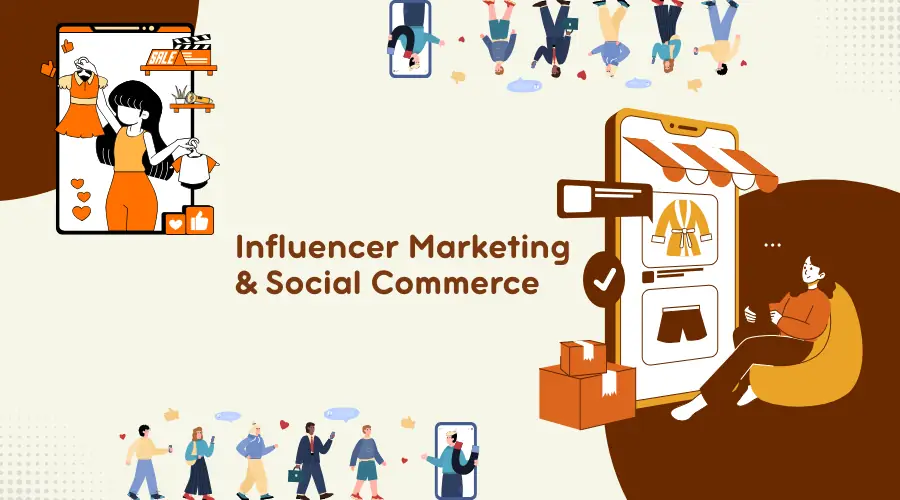
For years, social media was mainly a place where people shared photos, watched videos, followed celebrities and connected with friends. Today, it has become something much bigger: a place where people discover products, research brands, ask for recommendations and actually make purchases. This change has created a powerful opportunity for businesses through social commerce and influencer marketing. Instead of following the traditional journey of seeing an advertisement, searching for a product on Google, visiting a website and then deciding whether to buy, consumers can now discover a product through an Instagram Reel, watch a creator demonstrate it, read comments and reviews, and move directly toward a purchase. In 2026, this shift is becoming particularly important for businesses that depend on social media to attract customers. What Is Social Commerce? Social commerce is the process of using social media platforms to promote, discover and sell products or services. It goes beyond simply posting an advertisement on Instagram or Facebook. The goal is to make social media part of the actual customer journey. For example, imagine someone scrolling through Instagram and seeing a creator using a skincare product. Instead of searching for the product later, the person can tap the product information, visit the brand’s store, ask questions through messaging and make a purchase. That is social commerce. Platforms such as Instagram, Facebook, TikTok and YouTube are increasingly connecting content with shopping experiences. Shopify’s 2026 social commerce research highlights creator-driven commerce, short-form video, reviews and conversational shopping as major developments in the space. The biggest change is simple: Social media is no longer only where customers discover brands. It is becoming part of where they decide what to buy. Why Social Commerce Is Growing So Quickly One major reason behind the growth of social commerce is changing consumer behaviour. People don’t always begin their shopping journey with a search engine anymore. Sometimes they discover a product while watching a Reel, following a creator or browsing content from a brand. This is particularly visible in India. According to Meta and the Retailers Association of India, social media now influences 77% of retail purchase decisions in India, while short-form video has become a major part of product discovery. Their 2026 research also found that 97% of consumers surveyed watch short-form video daily. This matters because social media combines three things that traditional advertising often struggles to bring together: Attention + Trust + Convenience A good creator can grab someone’s attention. A genuine product demonstration can build trust. A product link or messaging option can make taking the next step easier. That combination is one of the biggest reasons brands are investing more heavily in social commerce. The Rise of Influencer Marketing Influencer marketing has also changed significantly. A few years ago, brands often focused on celebrities and influencers with millions of followers. Today, follower count isn’t always the most important factor. A creator with 20,000 highly engaged followers may sometimes be more useful to a brand than a celebrity with several million followers. Why? Because smaller creators often have stronger relationships with their communities. Their content can feel more personal. Their recommendations may feel more like advice from a trusted person rather than a traditional advertisement. Sprout Social’s 2026 influencer marketing research identifies micro-influencers, social commerce integration, AI-assisted workflows and performance-based measurement among the major trends shaping influencer marketing. This is why brands are increasingly looking beyond celebrity endorsements. They want creators who have: In other words, the right audience can matter more than a huge audience. Why UGC Is So Important Another major trend connected with social commerce is user-generated content, or UGC. UGC is content created by customers or creators that shows a product in a natural, everyday situation. It could be: The reason UGC works is that it doesn’t always feel like an advertisement. People can see the product being used instead of simply being told that the product is good. This distinction is becoming increasingly important because audiences are exposed to thousands of promotional messages every day. HubSpot’s 2026 social media research found that 77% of social media marketers believe authenticity is more important than production value when creating content. That doesn’t mean brands should create low-quality content. It means that polished content without personality may not be enough anymore. A simple video recorded naturally, with a real person explaining how they use a product, can sometimes connect better with an audience than an expensive advertisement. Short-Form Video Is Driving Product Discovery If social commerce is the destination, short-form video is one of the main roads getting consumers there. Instagram Reels, YouTube Shorts and TikTok-style videos have changed how brands communicate with audiences. Instead of explaining everything in a long advertisement, brands can demonstrate a product within seconds. For example, a clothing brand can show: “3 ways to style one dress.” A beauty brand can show: “Get ready with me using our new collection.” A jewellery brand can show: “How this necklace looks with three different outfits.” A restaurant can show: “What you get for ₹999.” The content doesn’t have to feel like a sales pitch. The product becomes part of the story. Meta’s India research shows just how important this format has become, reporting that short-form video and creators are reshaping product discovery and influencing purchase decisions. Social Commerce Is Becoming More Conversational Another important development is the connection between social media, messaging and shopping. Consumers don’t always want to click through multiple pages to find information. Sometimes they simply want to ask: “Is this available in black?” “What sizes do you have?” “How long will delivery take?” “Can you send me the price?” This is where platforms such as WhatsApp become particularly valuable for businesses. Meta reported in 2026 that WhatsApp is increasingly becoming a commerce channel in India, connecting discovery, conversations, purchase and post-purchase interactions. For small businesses, this can be especially useful. A local jewellery store, salon, clothing boutique or restaurant doesn’t necessarily need a complicated sales funnel. A customer can discover the business on Instagram, watch a Reel, click WhatsApp and start a