
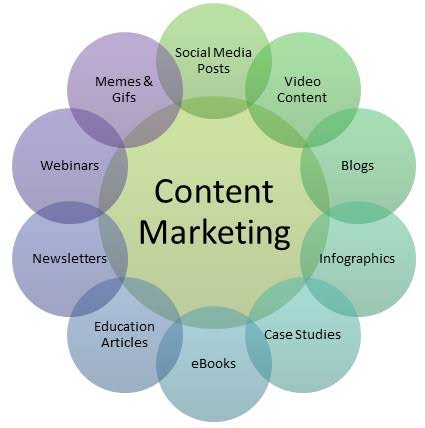
A few years ago, creating a video for a business usually meant having a camera, proper lighting, editing software and a lot of time.
Today, things are very different.
A smartphone is enough to create a video, edit it and publish it to thousands of potential customers. Platforms such as Instagram, YouTube and other social networks have made short-form video one of the most important formats in digital marketing.
From a 15-second product demonstration to a 60-second educational video, short videos have become a simple way for brands to attract attention and communicate an idea quickly.
But there is more to short-form video than simply making Reels or Shorts.
In 2026, successful video marketing is increasingly connected with search, content strategy, creators, artificial intelligence, social commerce and customer behavior.
For businesses, the question is no longer just “Should we make videos?”
It is:
“How can we create videos that people actually want to watch and that also contribute to our marketing goals?”
What Is Short-Form Video Marketing?
Short-form video marketing is the use of relatively short videos to promote a business, product, service, idea or personal brand.
Some common formats include:
- Instagram Reels
- YouTube Shorts
- TikTok videos
- Product demonstrations
- Tutorials
- Educational clips
- Customer testimonials
- Behind-the-scenes videos
- Before-and-after videos
- Influencer videos
- UGC videos
The length can vary depending on the platform and type of content.
The important thing is not necessarily how many seconds the video lasts.
The important thing is whether the video gives the viewer a reason to continue watching.
Why Is Short-Form Video So Popular?
Attention has become one of the most valuable resources online.
People scroll quickly.
If a video does not immediately look interesting, there is always another video one swipe away.
This has changed the way marketers approach content.
Instead of explaining everything at once, brands increasingly use short videos to deliver one useful idea at a time.
For example, a skincare brand might create separate videos about:
“How to use a cleanser correctly”
“3 mistakes that cause dry skin”
“How to layer skincare products”
“What does salicylic acid actually do?”
Each video answers one question.
This makes content easier to consume and easier to produce consistently.
Short-Form Video Is Also a Search Tool
One of the biggest changes in content discovery is that people do not rely only on traditional search engines anymore.
They also search for information through social platforms.
Someone looking for a restaurant might search Instagram.
Someone learning makeup might search YouTube.
Someone looking for a quick tutorial might search directly within a social platform.
This means video content needs to be discoverable.
Marketers should think about keywords, captions, titles, descriptions, spoken content and the actual topic of the video.
This is sometimes referred to as video SEO.
What Is Video SEO?
Video SEO means optimizing video content so that it has a better chance of being discovered through search.
For example, instead of naming a video:
“IMG_4837_Final_Final.mp4”
a marketer could use a clear topic such as:
“5 Easy Makeup Tips for Beginners”
The same principle applies to captions, titles and descriptions.
If your video is about “SEO tips for small businesses,” those words should naturally appear in the title or description.
The goal is not to stuff keywords everywhere.
It is to make it clear what the content is about.
The First Few Seconds Matter
One of the biggest challenges with short-form video is getting people to stop scrolling.
This is why the opening seconds are extremely important.
A video can have excellent information, but if the introduction takes too long, viewers may leave before reaching the useful part.
Instead of starting with:
“Hi everyone, welcome back to my channel…”
you could start with:
“Your Instagram Reels aren’t getting views? Try these three changes.”
That immediately tells the viewer what they are going to get.
Other useful hooks include:
- “Most beginners make this mistake…”
- “Here’s why your ads aren’t converting…”
- “Before you buy this, watch this…”
- “Three things I wish I knew before starting…”
- “If you’re struggling with SEO, start here.”
A good hook does not have to be clickbait.
It simply needs to create curiosity or communicate value quickly.
Educational Content Performs Differently
Not every video needs to entertain.
Educational content can work extremely well when it solves a specific problem.
For example, a digital marketing agency could create videos explaining:
- What is SEO?
- What is Google Ads?
- What is a backlink?
- What is a meta description?
- How does keyword research work?
A jewellery business could create:
- How to identify hallmarked gold
- Difference between 22K and 18K gold
- How to clean jewellery
- How to choose jewellery for different outfits
This type of content can build authority.
Instead of constantly saying “Buy from us,” the brand becomes a source of useful information.
That can make customers more comfortable when they eventually decide to purchase.
Short-Form Video and Brand Building
A common mistake is to think that every video needs to generate an immediate sale.
It doesn’t.
Some content is designed to create awareness.
Some content builds trust.
Some content educates.
Some content generates enquiries.
And some content directly promotes a product.
A strong content strategy uses different types of videos rather than turning every Reel into an advertisement.
For example, a fashion brand might use:
40% educational content
Styling tips and fashion advice.
30% entertaining content
Trends, relatable situations and creative videos.
20% social proof
Customer reviews and creator content.
10% promotional content
Products, offers and launches.
The exact percentages do not have to be followed strictly.
The main idea is to avoid making the entire account feel like one long advertisement.
The Growth of UGC Video
User-generated content is particularly useful for short-form video.
A customer can show how they actually use a product instead of the brand simply describing it.
For example:
A makeup customer records herself applying a foundation.
A hotel guest records a room tour.
A customer shows how a piece of jewellery looks when worn.
A restaurant customer records their meal.
This type of content can feel more natural than traditional advertising.
It also gives businesses a library of real-world content that can potentially be reused with permission.
Influencers Are Turning Videos Into Recommendations
Creators have also changed video marketing.
Instead of a company simply saying:
“Our product is amazing.”
a creator can demonstrate the product to their audience.
That creates a different kind of communication.
The creator already has an established relationship with their audience, so the recommendation can feel more personal.
This is particularly effective in categories such as:
- Beauty
- Fashion
- Food
- Travel
- Fitness
- Technology
- Jewellery
- Lifestyle
However, follower count should not be the only factor when choosing a creator.
A smaller creator with a highly relevant audience can sometimes produce better results than a large creator whose audience is unrelated to the product.
AI Is Changing Video Creation
Artificial intelligence is making video production faster.
AI tools can help marketers with:
- Script ideas
- Video concepts
- Captions
- Subtitles
- Voiceovers
- Translations
- Video editing
- Content repurposing
- Thumbnail ideas
- Creative variations
This is particularly useful for small businesses that do not have a dedicated video production team.
A marketer could take one long interview and turn it into several short clips.
One blog post could become multiple videos.
One customer testimonial could become several pieces of social content.
This process is known as content repurposing.
But AI Cannot Replace Originality
The increasing use of AI also creates a problem.
If every business uses the same tools to create the same style of videos, social media can quickly become repetitive.
The brands that stand out will need something AI alone cannot provide: original experiences and perspectives.
A founder talking honestly about how a business started can be more interesting than a perfectly generated corporate video.
A customer showing a genuine experience can be more convincing than a generic advertisement.
A marketer sharing an actual lesson from a campaign can be more valuable than another list generated from common advice.
AI can help with production.
But the idea still needs to be worth watching.
Short-Form Video for Small Businesses
One of the best things about short-form video is that small businesses can compete without having the biggest advertising budget.
A local salon, restaurant, jewellery store or resort can create content using a smartphone.
For example, a resort could create:
Video 1: A quick room tour
Video 2: Morning view from the property
Video 3: “Things to do during your stay”
Video 4: Guest experience
Video 5: Behind-the-scenes preparation
Video 6: Food being prepared
Video 7: Frequently asked questions
None of these requires a Hollywood production.
What matters is showing something that potential customers actually want to see.
How to Create a Good Short-Form Video
A simple structure can make video creation easier.
Step 1: Start With a Problem
Think about something your audience wants to know.
For example:
“Why aren’t my Instagram Reels getting views?”
Step 2: Create a Strong Hook
Give people a reason to keep watching.
“Your Reel might not be failing because of the algorithm.”
Step 3: Give the Value
Explain the solution clearly.
Avoid unnecessary information.
Step 4: Keep the Visuals Moving
Use different shots, text overlays, close-ups or demonstrations where appropriate.
This helps maintain attention.
Step 5: End With a Simple CTA
Your call-to-action could be:
“Save this for later.”
“Follow for more SEO tips.”
“Comment if you want Part 2.”
“Visit our website to learn more.”
The CTA should match the purpose of the video.
Don’t Forget Captions and Accessibility
Not everyone watches videos with sound.
Adding captions can make content easier to understand and more accessible.
Captions also give platforms additional context about what the video is about.
Similarly, clear on-screen text can help communicate the main idea quickly.
The text should be easy to read and should not cover important parts of the video.
How to Measure Video Marketing Success
Views are useful, but they do not tell the entire story.
A video with 10,000 views is not necessarily more successful than a video with 2,000 views.
The important question is what happened after people watched it.
Marketers should consider:
Views: How many people watched?
Watch time: How long did they stay?
Completion rate: How many watched until the end?
Shares: Did people send it to others?
Saves: Was it useful enough to keep?
Comments: Did it start a conversation?
Profile visits: Did viewers want to know more?
Clicks: Did they visit the website?
Conversions: Did the content contribute to enquiries or sales?
These metrics provide a much clearer picture of performance.
What Makes a Short Video Successful?
There is no single formula that guarantees viral content.
However, successful videos often have several things in common.
They are:
Relevant — They address something the audience cares about.
Easy to understand — The message is clear.
Interesting quickly — The opening creates curiosity.
Authentic — They don’t feel unnecessarily scripted.
Useful or entertaining — There is a reason to watch.
Easy to share — Viewers feel that someone else would benefit from it.
This is why chasing viral views should not be the only goal.
A video that reaches 5,000 highly relevant potential customers may be more valuable to a business than a video that reaches 500,000 people who have no interest in the product.
The Future of Short-Form Video Marketing
Short-form video is unlikely to disappear.
Instead, it is likely to become more integrated with search, shopping, creators and AI.
Videos will increasingly be used not just to entertain but to educate, demonstrate products, answer questions, build trust and influence purchasing decisions.
Search engines and social platforms are also becoming more visual, which means marketers need to think beyond traditional text-based SEO.
The future marketer may need to understand both how to rank written content and how to make video content discoverable.
That makes video SEO an increasingly useful skill for digital marketing professionals.
Final Thoughts
Short-form video has changed digital marketing because it has made content faster, more visual and easier to consume.
But creating a Reel simply because everyone else is doing it is not a strategy.
Businesses need to understand their audience, create useful content, experiment with different formats and measure what actually works.
The biggest opportunity is not necessarily to create more videos.
It is to create better videos with a clear purpose.
Whether the goal is awareness, engagement, trust, website traffic or sales, every video should have a reason for existing.
And as AI makes video creation easier, the real competitive advantage may become originality.
Technology can help you create the video.
But your idea, experience and understanding of your audience are what make people want to watch it.
SEO Details
Primary Keyword: Short-Form Video Marketing
Secondary Keywords: Video Marketing, Short-Form Video, Reels Marketing, YouTube Shorts Marketing, Video SEO, Content Marketing, Social Media Marketing, Instagram Reels, Video Content Strategy, Digital Marketing Trends 2026
SEO Title: Short-Form Video Marketing in 2026: Why Reels and Shorts Matter
Meta Description: Learn how short-form video, Reels, YouTube Shorts and video SEO are changing content marketing and digital marketing strategies in 2026.
URL Slug: /short-form-video-marketing-2026/
Suggested H1: Short-Form Video Marketing in 2026: Why Reels and Shorts Matter
Featured Image Alt Text: Short-form video marketing trends including Instagram Reels and YouTube Shorts in 2026